
The multifaceted role of Krishna in the Mahabharata: protection of religion, politics, and preaching
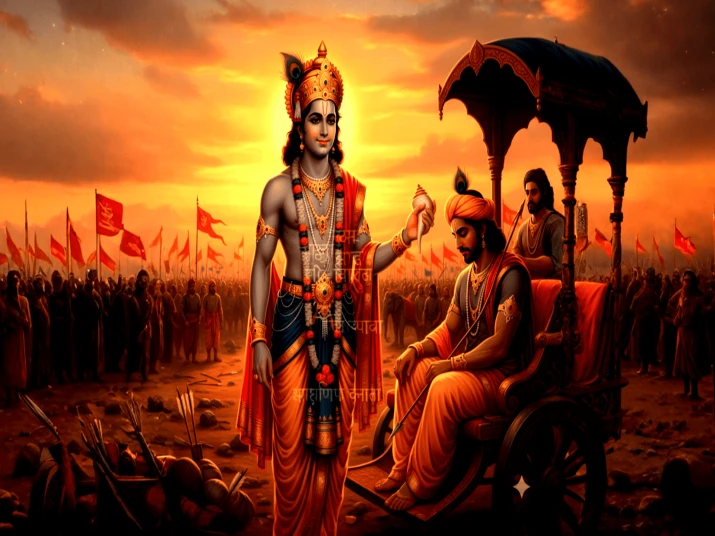
Table of Contents
- Krishna's multidimensional role in the Mahabharata: protecting religion, politics and preaching
- How is Krishna's policy of making all efforts for peace before the war begins reflected in today's international law?
- What aspects of Krishna's friendship with Arjuna make his character unique?
- What is the significance of Krishna's unarmed participation in the Kurukshetra War?
- How is the Karma Yoga that Krishna talks about in the Gita compatible with human life?
- What is the philosophical explanation for why Krishna encourages Arjuna to fight, but does not fight himself?
- How important is ‘observing one’s own religion’ (svadharma) according to Krishna’s teachings?
- How ethical was Krishna's 'strategy'? What is his position between deceit and justice?
- What message does Krishna's intervention during Draupadi's disrobing convey about human ethics?
- Why did Krishna's journey to Hastinapura with a peace proposal before the war fail?
- Why are Krishna's diplomatic efforts to prevent war important in the modern state?
- What was Krishna's personal relationship and political attitude towards evil rulers, Duryodhana and Karna?
- What symbolic meaning does the scene of Krishna and Arjuna standing in front of the chariot wheel have in human life?
- Can Krishna's annihilation be seen as part of his lila or philosophy of life?
- Which aspects of Krishna's diplomacy can be followed in today's politics?
- What are the similarities between modern warfare and Krishna's war strategy?
- How can Krishna's 'Gita Darshan' play a role in personality development in today's society?
- How does the Mahabharata present the death of Lord Krishna as a symbolic ending?
- Did the character of Krishna have a special influence on Vyasa's writing style?
- What are the differences between the Puranas and the Mahabharata in the character development of Krishna?
- What kind of psychological techniques did Krishna use to remove Arjuna's mental fears?
- What kind of psychological techniques did Krishna use to overcome Arjuna’s fears?
- What kind of impact does Krishna's concept of equanimity have on the human mind?
- How did Krishna's calm but firm attitude bring balance to the atmosphere of Kurukshetra?
- How important was 'foresight' in Krishna's decisions?
- Why does Krishna always try to find the root of the problem before solving it?
- Many people call Krishna's actions an example of 'strategic politics'. Is it reasonable?
- How can Krishna's 'impartial judgment' be applied in modern administration?
- How is Krishna's advice to accept the results of one's actions helpful in dealing with stress?
- In which areas is Krishna's sense of justice more needed in today's society?
- What kind of inspiration can Krishna's character provide for the modern youth?
- Can the Kurukshetra War be compared to the current superpower rivalry?
- Can Krishna's peace policy provide a solution to the current hostile world politics?
- How compatible is Krishna's principle of "establishing justice" with today's international human rights principles?
- How similar is Krishna's strategy in the Kurukshetra War to modern military strategy?
- How does Krishna's decision to "remain unarmed" fit into modern military policy?
- How relevant is Krishna's strategy to information warfare and psychological warfare?
- How effective can Krishna’s ‘weaponizing truth’ be in today’s media warfare?
Krishna's multidimensional role in the Mahabharata: protecting religion, politics and preaching
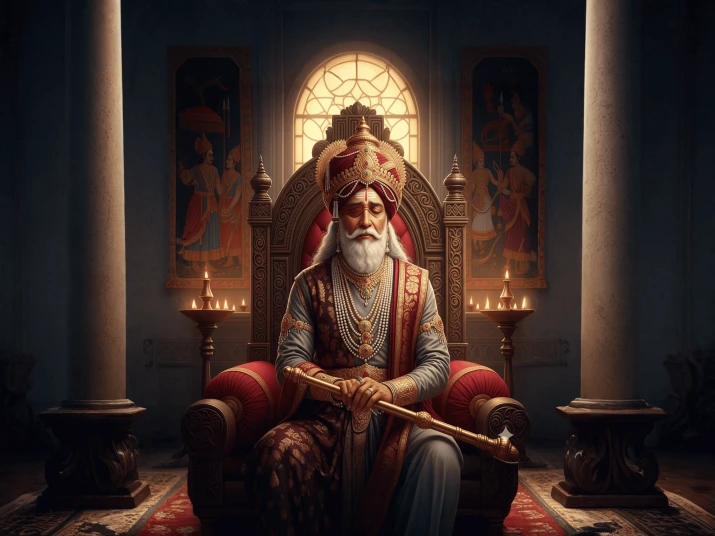
The character of Shri Krishna in the Mahabharata is a unique multi-dimensional reflection. He is not just a hero of the epic. Rather, he is the highest integrated form of religion, ethics, diplomacy and ideal politics. His role has guided the overall flow of the Mahabharata. And has become a shining example of how human decisions can be guided in the right direction on the path of establishing cosmic justice.
Shri Krishna is first seen as a religious guide. He explained the true nature of religion, the subtle difference between right and wrong and the importance of action in the Gita sermon. By resolving Arjuna's mental conflict, he not only gave courage to a warrior. Rather, he gave a philosophy of life to the entire mankind, which establishes him as the ultimate advisor.
On the other hand, Krishna's skills as a politician and diplomat are particularly brilliant in the Mahabharata. His presence in Hastinapur with a peace proposal to avert the Kurukshetra War is a great diplomatic effort. He knew that political wisdom is sometimes needed to ensure the victory of religion. Taking the side of the Pandavas was not a personal bias. Rather, it was a godly stance on the side of justice.
Even during the war, his role was that of a strategic guide. Krishna, as a charioteer, showed that leadership can be given even from invisible forces. He determined the course of the war without taking up arms himself through his intellect, strategy and foresight.
All in all, Krishna is a religious man, a politician, a diplomat and a supreme advisor. But his true identity transcends all these. He is the moral centre of the Mahabharata, whose presence is the ultimate symbol of the establishment of religion.
How is Krishna's policy of making all efforts for peace before the war begins reflected in today's international law?
Krishna's peacemaking before the war begins is one of the most important chapters in the Mahabharata. His visit to Hastinapur to avert the horrors of Kurukshetra, his compromise proposal, and his call for a just solution are strikingly similar to the peacemaking principles of today's international law. Several fundamental principles of principles that have developed for resolving disputes between states in the modern world are clearly reflected in Krishna's diplomatic behavior.
First, Krishna gave utmost importance to negotiation. By highlighting the just demands of the Pandavas, he tried to ensure that a solution was found through mutual understanding instead of war. One of the fundamental principles of the UN Charter is the peaceful settlement of disputes, which includes negotiation and mediation, as is evident in Krishna's actions.
Second, Krishna's diplomatic efforts were an ancient example of preventive diplomacy. He knew that the devastation of war causes irreparable damage in both human and social terms. In modern international law, peace efforts are made to prevent conflict. The appointment of UN special envoys or third-party intervention. A cultural precursor to this can be seen in Krishna's journey.
Third, the idea of a just compromise was evident in Krishna's proposal. He reduced the Pandavas' demands to a minimum, to just five villages. This is consistent with the modern principles of equality and fairness. Principled negotiation in international law emphasizes this very principle.
Finally, Krishna saw war as a last resort. Just as armed conflict is considered a final and involuntary option in today's international law. Therefore, it can be said that Krishna's peace efforts are not just part of an epic poem. It is an ancient and timeless example of modern peace policy.
What aspects of Krishna's friendship with Arjuna make his character unique?
Krishna's friendship with Arjuna is one of the most touching and profound relationships in the Mahabharata. It elevates Krishna's character to the pinnacle of uniqueness. This friendship is not just about affection or personal intimacy; it also involves principles, duties, knowledge, and spiritual leadership.
First, the unique aspect of Krishna's friendship is his selflessness. He never used Arjuna for his own interests. Rather, he helped Arjuna make the right decisions, mental fortitude, and the path of religious observance. As a friend, Krishna always wished Arjun well-being, which made their relationship an example of humanity.
Second, Krishna's sense of responsibility deepened the friendship. During the Kurukshetra War, he guided Arjun on the right path by serving as his charioteer without taking up arms. This role shows that a true friend never fights, instead of a friend. Rather, it helps him awaken his own strength and sense. This humble yet wise role of Krishna makes his character unique.
Thirdly, the Gita sermon is the highest peak of Krishna-Arjuna friendship. Where not as a friend. Rather than a spiritual guru, he guides Arjuna towards a deep understanding of karma, religio, and self-knowledge. This dual role gives Krishna's personality as a friend and a mentor a multidimensional form.
Finally, their friendship is based on mutual respect, trust, and honesty. Krishna knew both Arjuna's weaknesses and strengths, so he gave the right instructions at the right time and put Arjuna on the path of transcendence.
These aspects make Krishna's character unique not only as a godlike, but also as a humane and eternal ideal friend.
What is the significance of Krishna's unarmed participation in the Kurukshetra War?
Krishna's unarmed participation in the Kurukshetra War carries one of the deepest philosophical and political significances of the Mahabharata. He himself declared that he would not fight, would not take up arms. Yet his presence determined the course of the war. This strange combination makes his character unique and gives a new dimension to the moral basis of war.
First, Krishna's unarmed participation further illuminates his moral position. He did not support the war. Rather, he helped direct the just war necessary for the establishment of religion in the right direction. By not taking up arms, he showed that leadership is not always a manifestation of power. Sometimes, knowledge, strategy, and ethical thinking become the greater power.
Second, Krishna's position as a charioteer is a high example of selfless service. Despite being a god, he becomes a charioteer for a friend. This reveals the depth of his mental humility, humanity, and friendship. At the same time, it reminds us that a true guide or advisor never fights standing in front. Rather, it helps the warrior realize his own strength.
Thirdly, Krishna's unarmed tactical instructions are as important as the teachings of the Gita. He freed Arjuna from mental confusion and set him on the path of duty. This role of his proves that mental fortitude is more powerful than weapons on the battlefield.
Finally, this position of Krishna teaches an eternal lesson to human society. The establishment of religion and morality is not always through destruction. It is also possible through the right direction, right knowledge, and wisdom. Therefore, Krishna's unarmed participation in a great war like the Battle of Kurukshetra has made his character a symbol of the highest moral power.
How is the Karma Yoga that Krishna talks about in the Gita compatible with human life?
The ‘Karma Yoga’ Krishna discusses in the Gita is one of the deepest philosophical guidelines for human life. The main teaching of Karma Yoga is to perform one’s duty. But without being attached to the results. This principle creates stability, peace, and a sense of responsibility in a person's mind amid the various pressures, confusion, and uncertainties of modern life.
First, Karma Yoga teaches people that work is life, and every work is a kind of sadhana. If we perform the duties that we perform in the family, society or workplace with devotion and honesty, then the purpose of life becomes clearer. If we do not think too much about the results, mental stress decreases and the quality of work increases.
Second, Krishna says to do work, but you do not have the right to the results of your work. This principle removes both the ego and the frustration of the worker. If the results are good, people suffer from ego, and if the results are bad, they break down. Karma Yoga balances these two extremes, leading people towards a stable mindset.
Thirdly, Karma Yoga teaches selflessness. The well-wishing attitude of people, rising above personal interests, creates cooperation, justice and compassion in society. Even in today's fast-paced life, competition and individualism, Karma Yoga keeps people humane.
Finally, Karma Yoga teaches people to live in the present moment, to fulfil their responsibilities and to find joy in every task. In this, life does not depend only on external success. It also brings a sense of inner peace and fulfilment.
Therefore, Karma Yoga is not just a spiritual education. It is an eternal guidance that is deeply compatible with every aspect of human life.
What is the philosophical explanation for why Krishna encourages Arjuna to fight, but does not fight himself?
Why does Krishna encourage Arjuna to fight, but does not fight himself? This question is one of the deepest philosophical mysteries of the Mahabharata. The answer lies in religion, duty, and detached action.
First, Arjuna is a Kshatriya. His religion or Swadharma is to fight for justice. Krishna clearly says in the Gita, Swadharmame Nidhanam Shreya, meaning that performing one's duty is the highest sadhana. Therefore, it was Krishna's moral responsibility to remove Arjuna's confusion. Krishna does not fight. Rather, he encourages him to place that war on a just and religious path.
Second, Krishna keeps himself outside the war because his role is not human, but divine. He is a witness and controller, but not a direct participant. He gives strategy, knowledge, and direction, but does not involve himself in the results. This is the deep teaching of Karma Yoga, to work detachedly. Krishna remains at the center of the battle without fighting, which is a symbol of his philosophy of action.
Thirdly, his unarmed position carries an important message. Power is not always in the hands of arms, but in knowledge, truth, and ethics. Krishna, without taking up arms, taught that leadership does not mean the use of force, but giving the right direction at the right time.
Finally, this behavior of Krishna teaches humanity that every person has their own duty, and one should not take on the duties of others. By awakening Arjuna's warrior spirit, Krishna shows that everyone has to work from their own position to establish justice.
Therefore, Krishna's non-war presence and his encouragement to Arjuna to fight are both deeply integrated expressions of religion and philosophy.
How important is ‘observing one’s own religion’ (svadharma) according to Krishna’s teachings?
One of the fundamental foundations of Krishna’s teachings in the Gita is ‘observing one’s own religion’ or svadharma. According to him, svadharma is not just a social responsibility. It is deeply connected to a person’s personality, philosophy of life and spiritual development. Therefore, observing svadharma takes a person closer to his true self and clarifies the purpose of life.
First, Krishna says paradharmae vayankara, svadharmae nidhanam shreya. That is, imitating the religion or duties of others is never safe or beneficial. The nature, aptitude and role for which each person is born determine his true duty. By performing this duty, a person can develop their skills, character and abilities.
Second, observing svadharma provides mental stability and moral strength. When a person follows his own path, sincerity and devotion are born in his work. On the other hand, following the duties of others creates conflict, anxiety and uncertainty. This creates confusion like Arjuna. Krishna explains the importance of Swadharma to remove this confusion.
Thirdly, Swadharma also maintains social balance. If everyone performs their duties with devotion, then harmony, order and justice are established in the society. Every role, warrior, ruler, teacher or worker, is equally important in society. Krishna has highlighted the overall orderliness of the society through this rule.
Finally, practising Swadharma also paves the way for spiritual liberation. According to Karma Yoga, practising one's religion with devotion and detachment is the path to self-improvement. It keeps a person free from ego, responsible and calm.
Therefore, in Krishna's view, 'practising one's religion' is not just a duty. It is the key to the moral, social and spiritual progress of human life.
How ethical was Krishna's 'strategy'? What is his position between deceit and justice?
Krishna's 'strategy' in the Mahabharata is grounded in a complex yet deeply moral philosophy. His strategy may sometimes seem deceitful or cunning, but Krishna's position is always in favor of protecting religion and establishing justice. Therefore, to understand his strategy, it is important to examine the purpose and context of the events.
First, Krishna's strategy was a religious strategy. The Kurukshetra War was a struggle between justice and injustice; Duryodhana, Karna, and the Kauravas had already been committing various immoral acts of cheating, insulting, and usurping rights. In this situation, Krishna understood that it was difficult to defeat injustice with simple moral principles alone. Therefore, he adopted a strategy aimed at breaking the power of injustice and establishing justice.
Secondly, some of his tactics, such as bringing Bhishma before Shikhandi or calling Drona “Ashwatthama killed”, may seem cunning on the surface, but their main goal was to end the injustices of war. Krishna believed that when injustice reaches its peak, cunning can also be a tool for establishing justice. His every step was guided by the morality of the outcome, not for personal gain.
Thirdly, Krishna had a strict sense of justice. His cunning was never selfish; rather, it was essential to protect truth and justice. He knew that to stand against destructive forces, not only strength, but also intelligence and the application of situational principles were necessary.
Therefore, Krishna's policy and tactics were strategic justice. Where cunning is not injustice, but a means of establishing justice. In the conflict between cunning and justice, he took a position where the aim was always to protect truth, religion, and humanity.
What message does Krishna's intervention during Draupadi's disrobing convey about human ethics?
Krishna's miraculous intervention during Draupadi's disrobing is one of the most powerful human messages in the Mahabharata. Through this incident, Krishna did not just protect the honor of a woman. He taught the entire society a profound lesson about justice, human dignity, and moral responsibility.
First, this incident shows that human dignity cannot be violated at any cost. Even though there were many elderly, wise, and powerful people present in the assembly, no one stood up for Draupadi. Krishna's intervention is therefore a message to human society. Where people remain silent, divine power is forced to intervene to establish justice. It teaches that it is everyone's moral duty to protect the honor of the innocent.
Second, Krishna shows that the power of justice naturally stands by the one who stands against injustice. When Draupadi, having lost all hope of other help, surrendered completely and called out to Krishna, his help became a true refuge. This message is profound from a human perspective when an individual or society takes a moral stand. Then justice becomes strong, and injustice is finally defeated.
Thirdly, the incident of stripping is also a harsh criticism of society's view of women. Krishna's intervention proves that protecting women's honor is not only a social but also a moral and spiritual responsibility. True humanity is standing by the side of the weak, humiliated, and neglected.
Finally, this action of Krishna teaches that being a silent spectator of injustice is itself a crime. The true meaning of humanity is to protest when you see injustice, and to take it as your duty to protect the dignity of others.
Therefore, Krishna's intervention in Draupadi's stripping carries the highest message of human justice, dignity, and moral courage.
Why did Krishna's journey to Hastinapura with a peace proposal before the war fail?
Krishna's journey to Hastinapura with a peace proposal before the war is an important chapter in the Mahabharata. Krishna tried his best to avoid a conflict between the Kauravas and the Pandavas. But Duryodhana's arrogance, selfishness, and lack of justice were mainly responsible for the failure of this effort.
Firstly, Duryodhana and his evil advisors were completely arrogant. While presenting the peace proposal, Krishna had only one fair demand, namely the restoration of the five villages of the Pandavas. But Duryodhana thought that all power and prosperity were his only right. He gave priority to personal greed over justice.
Secondly, the tricks and deceit of the Kauravas created a big obstacle in the way of peace. As advised by Bhishma, Dhrishtadyumna, and others, they ignored Krishna's proposal. They thought that giving anything to the Pandavas would reduce their power. Their failure to heed Krishna's logic and moral appeal is a manifestation of their arrogance and selfishness.
Third, this failure shows that justice is not always easy to achieve. Sometimes, peace efforts fail due to powerful, immoral forces, and then the bearer of justice must adopt harsh measures. Krishna himself knew that war cannot be avoided as a last resort, but it is a moral duty to try.
Finally, the failure of Krishna's peace efforts also points to a moral lesson for human society. Pride, greed, and immoral advice can sometimes create obstacles in the path of peace. This failure shows that sometimes harsh decisions are necessary to establish true justice.
Why are Krishna's diplomatic efforts to prevent war important in the modern state?
Krishna's diplomatic efforts to prevent the Kurukshetra War are one of the most important aspects of the Mahabharata. He was not just a charioteer or a friend. Rather, he acted as a mediator between both the Pandavas and the Kauravas as a wise diplomat and a leader who established justice.
First, Krishna went to Hastinapura on behalf of the Pandavas and proposed peace. He tried to convince Duryodhana that the Pandavas' demand for only five villages was justified and that if they were respected, war could be avoided. This is a clear example of diplomacy, where a larger conflict was prevented by offering relatively small losses.
Second, he gave strategic advice, such as how to compromise and where to be firm during peace negotiations. Krishna explained that the outcome of the war would depend on who was on the side of justice, and sometimes it was necessary to take a firm stand to defeat injustice.
Third, Krishna was attentive to the mental state of each side. He warned against the pride and greed of the Kauravas and instilled faith in the firmness and justice of the Pandavas. This “mental diplomacy” of his made the peace effort more effective.
Fourth, Krishna’s presence itself was a disciplinary message. He tried to prevent war, but promised to take strategic steps at the right time to establish justice if necessary. This is similar to modern diplomacy, where a combination of show of force and negotiation is essential.
Finally, Krishna’s diplomatic effort teaches that establishing peace is difficult, but possible through just and strategic thinking. Although his peace effort failed to prevent war, it is an eternal lesson in moral leadership and diplomacy.
What was Krishna's personal relationship and political attitude towards evil rulers, Duryodhana and Karna?
Both personal relationships and political wisdom are clearly reflected in the character of Krishna in the Mahabharata. Evil rulers, Duryodhana and Karna. In these three cases, Krishna's attitude shows a combination of noble justice, strategy, and humane consideration.
First, Krishna's position towards evil rulers or injustice was completely fair. He knew that evil rulers bring disaster to society. Therefore, instead of directly intervening against evil rulers, he used strategy and advice. He aimed to maintain social balance and establish justice.
Second, Krishna's personal relationship with Duryodhana was complex. Personally, he was often annoyed by Duryodhana's arrogance and selfishness. But politically, he knew that it was not possible to suppress him directly. Therefore, Krishna adopted a far-sighted strategy to protect the justice of the Pandavas. He used peacemaking, mediation, and diplomacy together.
Thirdly, Krishna's relationship with Karna was one of deep personal friendship. Karna was very brave and just. However, he was attracted to injustice under the influence of Duryodhana. Krishna tried to bring Karna back to the path of justice as much as possible by warning and advising him. This shows that Krishna's wisdom was harmonious between personal friendship and political justice.
Finally, Krishna's political attitude was always linked to justice, religion, and humanity. He never resorted to tactics for personal harm or violence; rather, he took all steps to maintain the permanent interests of society and religion. This relationship between him and Duryodhana and Karna is a symbol of eternal moral and political education.
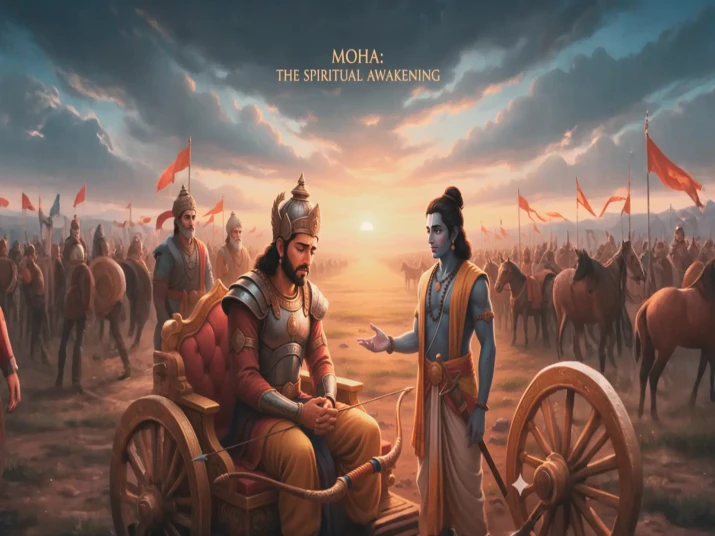
What symbolic meaning does the scene of Krishna and Arjuna standing in front of the chariot wheel have in human life?
The scene of Krishna and Arjuna standing before the chariot wheel is the most symbolic and philosophically fulfilling moment in the Mahabharata. It is not just a preparation for war, but also a symbol of responsibility, conflict, justice, and decision-making in human life.
First, Arjuna's worries and dilemmas reflect our inner conflicts. He was in a state of mental confusion while fighting for his family, friends, and justice. This reminds every person in life that sometimes we have conflicts over our responsibilities and morality.
Second, Krishna's role symbolically dictates leadership, guidance, and insight. Krishna, standing as a charioteer on the chariot wheel, shows that we need wisdom and advice to make decisions about justice, religion, and the path of action in life. Krishna did not just show Arjuna the way. He taught us to be responsible and aware in every step of life.
Third, the chariot wheel itself is a symbol of human life and time. Each part of the wheel, the horses of the chariot, all these are indications of the dynamics of life, control, and responsibility. When Arjuna accepts Krishna as the charioteer, it indicates that man has to take responsibility for his own life. But he also needs the help of wisdom and moral guidance.
Finally, this scene teaches the eternal lesson of human life that, despite conflicts, hesitations, and fears, moving forward on the path of justice, duty, and eternal truth is true humanity. It indicates that each person must drive his own 'chariot' and, with the help of wisdom, carry the journey of life on the right path.
Therefore, the scene of Krishna-Arjuna in front of the chariot wheel is a symbolic image of moral responsibility, decision, and wisdom in life.
Can Krishna's annihilation be seen as part of his lila or philosophy of life?
In the Mahabharata, Krishna's annihilation or the destruction of unjust forces through war is not just a historical event. It is seen as an integral part of his philosophy and lila. Krishna never fought for himself. Rather, his goal was to establish justice, protect religion, and the welfare of mankind. Therefore, he conducted the annihilation from a moral and spiritual perspective.
First, Krishna's lila is a spontaneous step for the destruction of unrighteousness. As a result of the immoral activities, misdeeds, and enmity of the Kauravas and Duryodhana, instability and injustice increased in society. Krishna knew that defeating that force was essential to maintain religion, justice, and social balance. Annihilation is therefore not due to personal pride or greed, but is necessary for the protection of religion.
Secondly, this step of Krishna is part of lila and incarnation. He took incarnation on earth to teach people and ensure the victory of justice. Through war and genocide, he has shown that sometimes drastic measures are necessary to establish justice. This is directly linked to his philosophy of life. Standing against injustice and protecting religion is the fundamental duty of life.
Thirdly, this incident shows the combination of action, ethics, and wisdom. Krishna himself did not fight with weapons, but determined the course of war through strategy, instructions, and guidance. This proves that genocide is not just destruction. It is a symbol of the victory of justice and human ideals.
Therefore, Krishna's genocide is part of his leela and philosophy of life. This is a deep symbol of establishing justice, protecting religion, and the welfare of mankind.
Which aspects of Krishna's diplomacy can be followed in today's politics?
Some aspects of Krishna's diplomacy are very relevant and followable in today's politics. His strategy in the Mahabharata was not only personal. Rather, it was linked to justice, society, and state welfare. If these principles are adopted in modern politics too, it is possible to ensure justice, efficiency, and permanent leadership.
First, the strategy of mediation and compromise. Krishna tried his best to establish peace between the Pandavas and the Kauravas. Finding solutions through negotiations in today's political conflicts, disagreements, or international conflicts. This is the key. Taking the role of a neutral mediator to avoid a final conflict is an effective policy.
Second, foresight and strategic planning. Krishna used to take action after considering all the situations. Any action was not just selfish, but was for greater justice and a permanent solution. Such foresight, a combination of principles and strategies by leaders, is essential in modern politics.
Third, strategic actions with morality. Krishna never used strategies for personal gain or power. All the steps were based on religion and justice. Even today, strategic thinking along with ethics in political decisions helps leaders gain lasting support and public trust.
Fourth, advisory and instructive leadership. Krishna did not just use tactics. He advised as needed and helped develop people's capabilities. In modern politics, such a role as an advisor or policy-maker can ensure justice, stability, and democratic solutions.
Therefore, Krishna's diplomacy in today's politics is mediation, foresight, ethics, and instructive leadership. If you follow the four directions, effective and just politics is possible.
What are the similarities between modern warfare and Krishna's war strategy?
There are significant similarities between modern warfare and Krishna's war strategy, despite differences in time, technology, and context. Krishna's strategy was mainly based on morality, strategic intelligence, psychological understanding, and situational decisions. This is also an important indicator in today's military strategy.
First, accepting war as a last resort. This idea is the core of Krishna's diplomacy. He tried to make peace many times before the war. Modern international law and the United Nations have also made negotiations a mandatory step before any conflict. This is completely consistent with Krishna's vision.
Second, one of his strategies was information gathering, understanding the enemy's mentality, analyzing the situation, and making decisions. "Intelligence", "strategic assessment," and psychological warfare are very important in today's military strategy. Just as Krishna knew the weaknesses and strengths of each warrior in Kurukshetra, modern militaries also plan based on information.
Third, the importance of mobility and quick decision-making on the battlefield. Krishna would take immediate decisions when the situation changed during the war (such as the special strategy to defeat Bhishma or Drona). “Real-time decision-making” is also very necessary in modern warfare.
Fourth, a major feature of Krishna’s strategy was to protect justice but use tactics in line with reality. Modern military policy also follows “Rules of Engagement”, but tactical flexibility is maintained when necessary.
Therefore, starting from peace efforts, realism combined with information-based decisions, psychological insight, quick reactions, and morality. In these five aspects, a deep similarity is observed between modern war policy and Krishna’s war strategy.
How can Krishna's 'Gita Darshan' play a role in personality development in today's society?
In today's society, Krishna's 'Gita Darshan' can act as an eternal guide for personality development. Amidst the pressure, competition and mental confusion of modern life, the teachings of the Gita help to develop people into stable, moral and wise individuals.
First, the principle of Karma Yoga teaches that we have to work with honesty, dedication and a sense of responsibility, but not excessive attachment to results. It increases self-control, mental fortitude and the ability to cope with pressure in the personality. When a person performs his duties without fear of consequences, self-confidence and stability are born.
Secondly, the observance of Swadharma and a sense of justice strengthen the moral character of a person. In the Gita, Arjuna is taught that performing one's duty is the main goal of life. It is instructive that performing the right role and responsibility of a person in society and professional life improves their personality and increases their respect.
Thirdly, it teaches detachment and equanimity to maintain mental balance. Accepting both success and failure in life equally makes a person's character humble, tolerant and stable. This is important to reduce the mental stress of modern life.
Fourthly, the Gita's self-knowledge and insight teach one to understand one's strengths and weaknesses and help in making the right decisions. It is helpful in determining the purpose and goals of one's life.
Therefore, the Gita philosophy is a disciplined path for personality development in today's society, which completes and strengthens a person through morality, responsibility, stability and self-control.
How does the Mahabharata present the death of Lord Krishna as a symbolic ending?
In the Mahabharata, the death of Lord Krishna is not just a historical event. It is depicted as a symbolic ending. Krishna's life and pastimes are a combination of religion, justice, friendship, strategy and self-knowledge. Therefore, his departure is also seen as a symbol of eternal learning.
First, Krishna's death symbolises the end of the cycle of religion and earthly life. He said that his work is complete. The end of injustice, the establishment of religion and the victory of the Pandavas have been ensured. Through Krishna's death, the Mahabharata shows that all-powerful characters, even god-like incarnations, stay on earth for a limited time. It reminds us of the transience of life and the importance of responsibility.
Second, his death carries a moral and spiritual lesson. The way Krishna peacefully goes to the forest kingdom to part. It indicates that accepting the finality of life is necessary for humans. It teaches self-control, mental stability and a conscious attitude towards death.
Thirdly, Krishna's departure marks the beginning of an epochal change. With his departure, the Kurukshetra War and its subsequent politics changed the traditional social and political order. It symbolically shows that the cycle of history, justice and dharma continues to be reconstructed.
Finally, the Mahabharata depicts Krishna's death as the ultimate end of all pastimes and dharma. It carries eternal lessons about human life, moral responsibility, eternal truth and the relationship with dharma. Krishna's death is therefore not just a symbol of mourning, but also an eternal symbol of spiritual and moral reflection.
Did the character of Krishna have a special influence on Vyasa's writing style?
Since the character of Krishna is the center of the Mahabharata, it has a profound influence on Vyasa's writing style. Krishna is not just a charioteer or a politician, but is full of moral, spiritual, and philosophical aspects. This combination is visible in Vyasa's writing, which makes the Mahabharata not just a history, but a moral and philosophical book.
First, Krishna's important didactic role brings out the moral and spiritual aspect in Vyasa's style. For example, in the Gita, Krishna teaches Arjuna to follow the path of karma yoga, svadharma, and justice. To portray this aspect, Vyasa presents Krishna as a symbol of a moral and spiritual teacher, not just an ordinary character.
Second, Krishna's moral strategies and diplomacy add depth of political wisdom to Vyasa's writing. For example, it is seen in the scenes of peace efforts or the determination of war strategy in Hastinapur. How personal friendship, morality, and the welfare of the state can be reconciled. Vyasa's commentary clearly highlights this aspect, which adds complexity and depth to the character.
Thirdly, Krishna's incarnation and the great life-long adventures add a mythological and philosophical dimension to Vyasa's style. The events of his birth, life, and death are not just stories, but also reveal lessons in religion, justice, and human life.
Therefore, the character of Krishna brings moral, philosophical, political, and spiritual depth to Vyasa's style of writing, making the Mahabharata an eternal great book. His life and adventures provide Vyasa with a rich and instructive perspective on characterisation.
What are the differences between the Puranas and the Mahabharata in the character development of Krishna?
There are some clear differences between the Mahabharata and the various Puranas in the character development of Krishna. Although both present Krishna as a god, a righteous leader, and a spiritual teacher, his style, style of pastimes, and special aspects take different forms.
First, in the Mahabharata, Krishna is mainly portrayed as a political, strategic, and moral character. The war of Kurukshetra, his friendship with Arjuna, and the sermons of the Gita. All these show his role as a diplomat, advisor, and charioteer. Here, Krishna's human side, foresight, morality, and strategic intelligence are predominant.
Second, the Puranas place more emphasis on Krishna's supernatural and Vaishnava pastimes. Such as the snake-killing Nanda Gopala in his childhood, Ganesha-like wrestling, insulting Dutapa or Kamsa, and various miraculous stories with the gopis. In this account, Krishna's divinity and miraculous powers become more prominent than his philosophical side.
Thirdly, in the Mahabharata, Krishna's character is built in a deep philosophical and moral light, where moral conflict, the teaching of self-respect, and Karma Yoga are given importance. On the other hand, in the Puranas, he is a symbol of incarnation and devotion-centered leela, which helps to inspire the devotees and understand the divine mystery.
Fourthly, in the Mahabharata, Krishna's war tactics, friendship, and advice are connected to human and political reality. Whereas in the Puranas, the stories of leela are mainly expressed in spiritual and mythological forms.
Therefore, the Mahabharata portrays Krishna in terms of justice, strategy, and humanity. Whereas the Puranas present him as a devotional and miraculous character through divine activities. This difference reveals the multidimensionality and richness of his character.
What kind of psychological techniques did Krishna use to remove Arjuna's mental fears?
Krishna used several psychological techniques to remove Arjuna's mental conflicts and fears in the Kurukshetra War, which are also instructive from the perspective of today's psychological counselling and leadership.
First, Krishna acknowledged Arjuna's fears and hesitations. Before the war began, when Arjuna expressed his love for his family and his fear of war, Krishna did not ignore or condemn him. Rather, he explained to Arjuna that conflicts are normal, and accepting his feelings as normal is the first step. This method is known in today's psychological process as "acknowledgement".
Second, Krishna provided peace of mind by analysing facts and reality. He reminded Arjuna that the goal of the war was to establish justice and that he was working on the path of dharma. This reduced Arjuna's mental stress and increased moral fortitude.
Third, Krishna taught through examples and analogies. He explains the principles of self-knowledge, karma yoga, and svadharma to show Arjuna how to balance personal feelings and social responsibilities. This approach is similar to modern cognitive techniques.
Fourth, Krishna increases motivation and self-confidence. He reminds Arjuna that he is not acting alone, but under divine guidance. This gives Arjuna self-control and stability.
Finally, Krishna's psychological technique enables Arjuna to overcome his fears and make moral and courageous decisions through support, reality awareness, example, and increased self-confidence. It is also inspiring for today's mental training and leadership development.
What kind of psychological techniques did Krishna use to overcome Arjuna’s fears?
The psychological techniques Krishna used to overcome Arjuna’s fears are also deeply instructive for mental health and leadership today.
First, Krishna acknowledged Arjuna’s fears and ambivalence. Before the war, Arjuna felt stressed by his responsibilities to his family and the potential loss of his relatives. Krishna reassured him that his feelings were normal and acceptable, which is a primary emotional support. In modern psychological counselling, this is known as “acknowledgement.” Acknowledging feelings stabilises the mind.
Second, he reminded Arjuna of reality and purpose. Krishna explained that the purpose of war is not just a power struggle, but also the establishment of justice and dharma. This reality-based guidance reduced Arjuna’s mental stress and gave him moral fortitude.
Third, Krishna used metaphors and philosophical teachings. He explained to Arjun the principles of karma yoga, svadharma, and nyaya. How can one maintain mental balance while performing one's duties? This method is similar to modern cognitive techniques.
Fourth, Krishna provided Arjuna with confidence and motivation. He reminded him that Arjuna was not alone. He was working under divine guidance. This helped Arjuna to make courageous and stable decisions.
In short, Krishna's technique provided support, reality awareness, example, and increased self-confidence. It enabled Arjuna to overcome fear and make ethical and effective decisions, which is also relevant to modern psychological and leadership development.
What kind of impact does Krishna's concept of equanimity have on the human mind?
Krishna's concept of equanimity or equanimity and equanimity has a profound impact on the human mind. In the Gita, Krishna describes someone who is equanimous as someone who is equally at ease in happiness and sorrow, gain and loss, praise and criticism. In modern life, this concept plays an important role in increasing mental stability and mental health.
First, equanimity helps people maintain mental balance. Despite the ups and downs of life, competition, or adversity, a person with equanimity is able to control his thoughts and emotions. This is effective in reducing stress, anxiety, and depression.
Second, it helps in making neutral and intelligent decisions. When a person is not influenced by his emotions. Then he can make decisions based on logic and reality. According to Krishna's teachings, a person with equanimity acts in all situations considering justice, religion, and long-term results.
Third, equanimity encourages self-knowledge and spiritual development. Knowing one's strengths and weaknesses, controlling emotions, and acting ethically allow a person to live a conscious and conscious life.
Fourth, steadiness also affects relationships and social behavior. Such a person is not easily irritated, is compassionate and patient, which has a lasting impact on family, social, and professional life.
In short, Krishna's concept of steadiness stimulates mental stability, intelligence, morality, and spiritual development in the human mind, which is very necessary for a stress-free, balanced, and well-thought-out life in modern life.
How did Krishna's calm but firm attitude bring balance to the atmosphere of Kurukshetra?
The atmosphere of the Kurukshetra war was extremely tense, confrontational, and mentally confusing. In this environment, Krishna's calm but firm attitude created a balanced atmosphere. This was instructive not only for Arjuna but for the entire battlefield.
First, Krishna's calmness provided mental stability. When Arjuna was frustrated due to conflict and fear towards his relatives and friends, Krishna gave reliable directions through peace and firmness in his voice. The calm and restrained attitude helped Arjuna to overcome his fears and concentrate on his duty.
Second, Krishna's firmness strengthened moral and strategic direction. Krishna's firmness served as a stable foundation in taking strategic steps on the battlefield, planning for psychological suppression of the enemy, and making decisions for the establishment of justice.
Third, his presence and attitude maintained balance in the overall situation. On the battlefield, emotions, anger, and confusion can easily escalate into unexpected or shallow situations. Krishna’s calm and firm attitude kept the tension in check, just as the presence of a skilled leader can keep a conflict-ridden environment under control.
Fourth, Krishna’s attitude teaches the lesson that self-control and firm principles can bring about resolution and stability, no matter the situation. This is as effective in the context of war as it is in facing the challenges of modern life.
In short, Krishna’s calm but firm attitude maintained mental stability, moral fortitude, and balance in the Kurukshetra, which were essential for victory and justice.
How important was 'foresight' in Krishna's decisions?
‘Foresight' was an integral and very important element in Krishna's decisions. In the Mahabharata, his every move was guided by strategic advice or diplomatic foresight. Foresight ensured not only the outcome of the war, but also justice, religion, and the lasting welfare of the society.
Firstly, Krishna used to analyze all the situations in advance and make decisions. For example, before making peace efforts and giving directions in Hastinapur, he predicted the mindset of the Kauravas, the possible reactions, and the outcome of the war. This shows that his decisions were always taken into account in the overall and long-term impact.
Secondly, Krishna's foresight was also applied to mental preparation and psychological strategies. To remove Arjuna's hesitation and fear, he resorted to advice, philosophical explanations, and confidence-building techniques. Due to foresight, Arjuna became not only ready for the war but also mentally stable.
Thirdly, Krishna used foresight in strategic and moral decisions. For example, when taking action against Bhishma, Dyuthopada, or the Kaurava chiefs, he planned by calculating justice, morality, and the long-term impact of the outcome. This shows that his foresight ensured not only victory but also justice and lasting social balance.
In short, foresight was the foundation of strategic, moral, and mental stability in Krishna's decisions. This gave him the character of not only a victorious leader, but also a just, far-sighted, and eternal teacher.
Why does Krishna always try to find the root of the problem before solving it?
Krishna always tried to find the root of the problem before solving it. Because he believed that effective solutions are not possible without proper analysis. In the Mahabharata, this applies not only to war or politics but also to morality, conflict, and social balance.
First, understanding the root of the problem helped Krishna make far-sighted, lasting decisions. For example, before the Battle of Kurukshetra, he analyzed the Kauravas' mindset, the weaknesses of their enemies, and Arjuna's mental state. Without this analysis, taking direct action or fighting would have resulted in uncertain or harmful results.
Second, by finding the root of the problem, Krishna emphasized solving the root cause, not the temporary or symptomatic problems. Whether it was making peace in Hastinapur, resolving Arjuna's dilemma, or determining the battle strategy, it all ensured lasting results by solving the root problem.
Third, it was part of his mental and moral leadership. He knew that making any decision with instability, emotions, or an influenced mind could be harmful. The key to effective leadership is to delve into the depths of the problem and consider the facts, moral values, and possible outcomes.
Fourth, Krishna's method also carries lessons that are applicable to every conflict in human life. Understanding the root cause of a problem in everyday life and solving it ensures mental peace, stability, and morality.
In short, Krishna would find the root cause of a problem because it enabled him to adopt far-sighted, ethical, effective, and lasting solutions. This was one of the main aspects of his leadership and teaching.
Many people call Krishna's actions an example of 'strategic politics'. Is it reasonable?
Many people call Krishna's actions an example of 'strategic politics'. And this is quite reasonable. In the Mahabharata, Krishna was not only a defender of religion and justice. He also displayed the art of strategy, diplomacy, and decision-making according to the situation.
First, Krishna's strategy was far-sighted and planned. Before the war started, he made peace efforts. He analyzed the psychological state of the enemy and determined the possible path for the Pandavas to win. This was not just a show of strength, but a main feature of strategic politics is to take action according to the situation.
Second, he maintained moral and political harmony. For example, during the peace negotiations at Hastinapur, he maintained a balance between power, justice, and relationships. Even while taking strategic steps, he never gave priority to personal interests or ego. Rather, he considered the greater justice and social welfare as the main thing.
Third, Krishna's strategy also relied on increasing psychological and political influence. Alleviating Arjuna's fear, mentally influencing the wicked Kauravas, and making decisions on the battlefield are all psychological and strategic politics.
Fourth, Krishna's strategy is goal-oriented and information-based. He did not take any action based on assumptions or emotions. Rather, he made decisions based on a combination of information, morality, and foresight.
In short, Krishna's actions are not only worthwhile and instructive from the perspective of religion or justice. They are also meaningful and instructive from the perspective of strategic politics. They are still relevant today for the education of modern political strategy and leadership.
How can Krishna's 'impartial judgment' be applied in modern administration?
The concept of 'impartial judgment' of Sri Krishna is very relevant for effective and ethical management in modern administration. In the Mahabharata, Krishna has shown impartiality not only in protecting religion or justice, but also in political and social decisions. This principle can be followed in many areas of modern administration.
First, increasing the fairness and credibility of the administration. An impartial and impartial administrator like Krishna becomes equally credible to the citizens. For example, he treated both the Kauravas and the Pandavas equally. As a result, the Pandavas trusted him, and the Kauravas also accepted his fairness. In modern administration, too, while making decisions, equal decisions should be taken based on information after listening to the statements of all parties.
Second, it is helpful in preventing corruption and irregularities. If there is bias or selfishness, the administration becomes weak. Krishna's just and impartial attitude shows that administration is effective when truth, justice, and morality are given the highest priority.
Third, mental stability and stability in leadership. If the administrator makes impartial decisions, he is free from pressure or influenced opinions. Like Krishna, the modern administrator is also able to take stable and far-sighted steps in difficult situations.
Fourth, it is important for the development of public welfare and policy potential. Impartial judgment helps formulate fair policies. It is helpful in resolving social conflicts and ensuring equal opportunities.
In short, Krishna's impartial judgment can be applied as the main foundation for ensuring justice, transparency, stability, and public welfare in modern administration.
How is Krishna's advice to accept the results of one's actions helpful in dealing with stress?
The idea of not accepting the results of one's actions (phalanirbhandha karmayoga) in the Gita advice of Sri Krishna is very helpful in dealing with stress. He taught Arjuna that one's duty is to try one's best. But one should not get emotional or attached to the results. This principle is effective in modern life to reduce stress, maintain equanimity, and improve performance.
First, this advice balances one's thoughts. Excessive attention or expectation of results creates stress, depression, and anxiety. By acting according to Krishna's instructions, one can focus on one's responsibilities and learn to accept the results, good or bad, naturally.
Second, it increases self-reliance and confidence. When one knows that one is doing one's duty properly. Then external reactions or results cannot disturb one's peace of mind. This helped one to remain equanimity in battle like Arjuna, and it is equally effective in reducing stress in today's professional and personal lives.
Third, the principle of not accepting the results of karma teaches foresight and stability. One keeps control over one's decisions and actions. But one does not get frustrated or worried about the results. It develops mental stability, patience, and a stable attitude.
Fourth, it is possible to reduce stress, increase responsibility, and maintain a positive attitude towards life through regular practice.
In short, through this teaching of Krishna, one can learn to focus on work, be restrained towards results, and maintain mental peace and stability. This is very relevant for a stress-free and productive lifestyle in modern life.
In which areas is Krishna's sense of justice more needed in today's society?
Krishna's sense of justice or his unwavering faith in religion and morality is very much needed in many areas of today's society. Amidst the complexities of the modern world, social conflicts, political pressures, and conflicts of personal interests, justice keeps society stable and people humane.
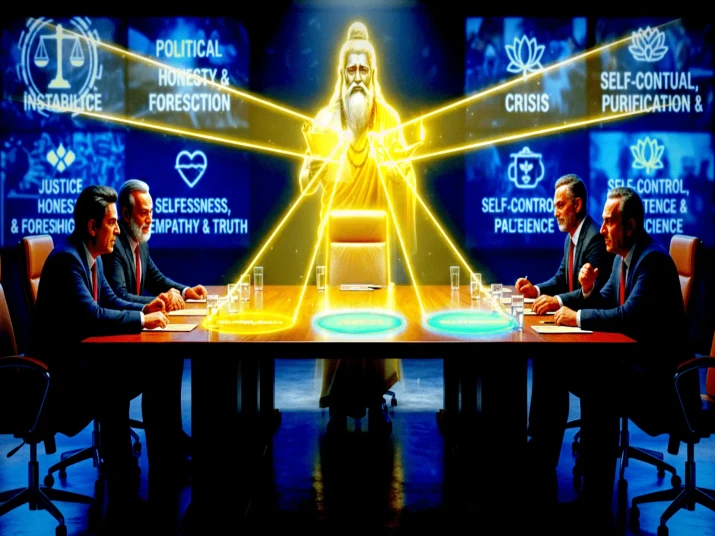
First, justice is very important in politics and administration. In modern society, political strategies and power struggles can often be immoral or selfish. A just attitude like Krishna's makes political decisions oriented and cautious towards the welfare of the people. He maintained justice with both the Kauravas and the Pandavas, which is instructive for modern administrators and leaders.
Second, justice is essential in the law and judicial system. Being free from bias, influence, or vested interests in any decision maintains social trust in people. Krishna's sense of justice teaches how to make unbiased decisions by combining information, morality, and foresight.
Third, justice keeps human relationships stable in social and family life. In modern society, mutual interests, competition, or disputes can easily create conflict. Krishna's teachings of justice show that honesty, equality, and fair behavior keep relationships and society together.
Fourth, justice in business and economics helps reduce corruption, fraud, and fraud. Krishna's righteous strategies and decisions prove that justice and honesty ensure long-term success and credibility.
In short, Krishna's justice is essential in today's society, in politics, law, social relations, and the economic system. In all areas, because it helps maintain stability, morality, and human values.
What kind of inspiration can Krishna's character provide for the modern youth?
The character of Krishna carries far-sighted, moral, and motivational lessons for the modern youth. His life and pastimes are not just religious stories. Rather, it is a multidimensional model of morality, courage, leadership, and self-control.
First, Krishna teaches the youth moral and patient leadership. It can be understood from the encouragement of Arjuna to perform his duties with steadfast wisdom and justice in the war in Kurukshetra. Patience, morality, and determination are essential to face the challenges of life. Modern youth can apply this in their education and career life.
Second, Krishna inspires mental stability and control of anxiety. The advice in the Gita is not to accept the results of karma. Focusing on one's duty and restraint towards the results all help to reduce mental stress and increase self-confidence. This is very necessary for a stress-free and fruitful lifestyle in modern life.
Thirdly, Krishna's character inspires the youth to be foresight, strategic, and creative in thinking. Resolving political and social conflicts, maintaining friendship, and upholding justice. He is strategic and prudent in all matters. This teaches the modern generation a skillful and ethical perspective in solving problems.
Fourthly, Krishna's character encourages self-confidence, a friendly attitude, and human values. His pastimes and life show that the combination of personal strength, wisdom, and morality makes life successful and quality.
In short, Krishna's character inspires the modern youth to be morally responsible, mentally stable, foresight and human values. This can have a lasting impact on their personality and social life.
Can the Kurukshetra War be compared to the current superpower rivalry?
It is quite logical to compare the Kurukshetra War with the modern superpower rivalry. Although the history and scope are different, the main features of the conflict of power, strategy, policy, and political interests are similar in both cases.
First, the main reason for the Kurukshetra War was the power, political, and moral conflict that took place between the Pandavas and the Kauravas. In the contemporary world, the competition between powerful countries is a reflection of political, economic, and military and similar conflicts. For example, states use strategy, diplomacy, and military capabilities to expand their influence.
Second, Krishna's diplomatic efforts and peace efforts before the war are comparable to bilateral or multilateral negotiations in the present world. For example, powerful states often follow the path of diplomatic negotiations, agreements, or mediation to avoid conflict. This does not rely only on a show of force, but also on situation analysis and moral and strategic calculations.
Thirdly, the moral and strategic conflict in Kurukshetra is also similar to modern rivalry. Powerful states sometimes achieve their goals by using strategy, political influence, or economic pressure rather than direct warfare. Krishna's war strategy and tactics also resemble this kind of stable and prudent planning.
Fourthly, Arjuna's dilemma, conflict, and moral dilemma in the Kurukshetra War reflect the challenges of moral and strategic decision-making for leaders in today's world. The challenge of considering which course of action will have the most balanced military, political, and social consequences is a timeless one.
In short, the Kurukshetra War is comparable to the current Superpower rivalry because, in both cases, maintaining a balance between power, strategy, morality, and justice is crucial.
Can Krishna's peace policy provide a solution to the current hostile world politics?
Krishna's peace policy or strategy can offer important solutions to today's tense, hostile world politics. In the Mahabharata, Krishna tried his best to establish peace not only during the war but also before the war. His policy of compromise, based on morality, foresight and strategic diplomacy, is instructive for today's states.
First, Krishna demonstrated the importance of dialogue and negotiation. The peace efforts with the Kauravas in Hastinapur are an example of his diplomatic skills. In the modern world, when states solve problems through bilateral or multilateral dialogue, the application of Krishna's policy is seen. Along with demonstrating strength in the right situations, diplomatic paths are pursued.
Second, Krishna's peace policy carried a moral and just basis. He never compromised with injustice and kept all steps consistent with justice. In the current world, it is very important to adhere to moral standards and international law in establishing peace between states.
Third, Krishna's policy relied on foresight and planned strategy. Considering all possible outcomes and risks before war, analysing the ally-enemy situation. This approach is relevant to modern diplomacy and conflict resolution.
Fourth, Krishna also emphasised empathy and relationship-building in peace efforts. Considering the humanitarian aspect, along with the demonstration of power, also ensures long-term stability in modern diplomacy.
In short, Krishna's peace policy can provide effective solutions to resolve conflicts and establish lasting peace through dialogue, justice, foresight, and relationship-building in today's hostile politics.
How compatible is Krishna's principle of "establishing justice" with today's international human rights principles?
Krishna's principle of "establishing justice" is largely compatible with today's international human rights principles. In the Mahabharata, Krishna always prioritized justice and the protection of the rights of the weak and exploited in wars, diplomacy, and moral decisions. In the modern world, human rights are also centered around protecting the freedom, justice, and dignity of the individual.
First, Krishna believed in protecting the weak and establishing justice. For example, when Draupadi was stripped of her clothes, he took quick action to protect Draupadi. Protecting the safety and dignity of the exploited and weak people also takes priority in international human rights principles.
Second, Krishna's principle relied on impartial and just decisions. Kauravas or Pandavas. Establishing justice without showing personal bias towards any party was his main principle. Modern human rights systems also encourage states, judges, and institutions to take impartial, equal, and just actions.
Thirdly, Krishna understood the importance of moral and legal procedures. Even when he used force, he always maintained moral and religious boundaries. International human rights also stand on legal, ethical, and humanitarian foundations, which ensure the right of the individual to freedom, life, education, and equality.
Fourthly, Krishna's justice emphasizes foresight and social welfare. Justice is not just about solving personal or temporary problems. It ensures the stability of the entire society. Human rights also create an environment of peace, stability, and respect in society.
In short, Krishna's justice policy bears natural and instructive correspondence with modern international human rights policy, which is relevant in ensuring morality, equality, and social welfare.
How similar is Krishna's strategy in the Kurukshetra War to modern military strategy?
Krishna's strategy in the Kurukshetra War closely resembles modern military strategy. In the Mahabharata, he is not just a soldier with weapons. Rather, he played an important role as a strategist, information analyst, and psychological strategist. Modern military strategy also depends on planning, information analysis, strategic positioning, and psychological influence.
Firstly, Krishna used an information-based strategy. He used to assess the enemy's strengths, weaknesses, combat numbers, and capabilities, as well as those of the allies. Intelligence Gathering and Situation Analysis are also essential in modern military strategy, which is the main basis of war planning.
Secondly, he used psychological warfare and psychological influence. Removing Arjuna's fear. Confusing the Kauravas is equivalent to Psychological Operations. Modern armies use psychological pressure, deception tactics of the opponent, and Information Warfare.
Thirdly, Krishna's strategy is characterized by flexibility and quick decision-making. On the battlefield, he would change his tactics according to the situation. Modern Warfare Doctrine also relies on Mission Flexibility and Real-time Decision-making.
Fourth, Krishna maintained moral and strategic boundaries. Even when using force, he considered moral and religious aspects. The importance of Rules of Engagement, International Humanitarian Law, and Ethical Warfare is essential in modern military strategy.
In short, Krishna's strategy in the Battle of Kurukshetra bears deep similarities to modern military strategy in terms of information dependence, mental strategy, flexibility, and moral constraints, which is instructive for war planning and leadership.
How does Krishna's decision to "remain unarmed" fit into modern military policy?
In the Battle of Kurukshetra, Krishna's decision to leave himself unarmed and place Arjuna in front of the chariot wheel is a spectacular strategy and has relevance to modern military policy. Krishna ensured victory through tactics, psychological impact, and morale without directly participating in the battle. Modern military policy also has the idea of achieving victory through planning, strategy, and leadership, avoiding direct conflict.
First, Krishna's policy indicates the importance of strategic command and control. He used to direct the war by standing on the chariot and giving instructions to Arjuna. In modern armies, army commanders conduct war through Tactical Command, Operations Planning, and Real-time Decision-making, rather than going directly into battle.
Second, it demonstrates the psychological and moral impact. Krishna's presence made Arjun brave and determined, and put the enemy under moral and psychological pressure. Psychological Operations or "Force Multiplier" tactics also create a similar effect in modern warfare doctrine.
Thirdly, Krishna’s decision to remain neutral and morally bound. He upheld the standards of justice and religion without resorting to the direct use of weapons. Maintaining impartial and moral boundaries is also important in modern International Humanitarian Law or Rules of Engagement.
Fourthly, it shows the ideal of leadership, where leadership can achieve goals through strategic and psychological influence rather than direct conflict.
In short, Krishna’s decision to “remain unarmed” is fully consistent and instructive with the strategic leadership, psychological influence, moral boundaries, and conflict-determining tactics in modern military policy.
How relevant is Krishna's strategy to information warfare and psychological warfare?
There is a surprising similarity between Krishna's strategy and modern information warfare and psychological warfare. The Kurukshetra War was not only a clash of arms, but also depended on information, psychology, and strategic communication. What are the main elements of modern warfare?
First, Krishna has often used information control and management as strategies. He gathered accurate information on the Kauravas' strengths and weaknesses and used it to determine the Pandavas' strategy. In modern information warfare, such as information flow, truth-false verification. Selected information is used to weaken the opponent; Krishna's strategy is also consistent with that style.
Secondly, Krishna was a unique example of Psychological Warfare. By removing Arjun's fear, uncertainty, and mental hesitation, he made him fit for war. Again, there are incidents like doubt, confusion, and mental stress among the Kauravas. For example, the illusion of a sunset before the killing of Jayadratha. This is a clear parallel to the deception tactics of modern psychological warfare.
Third, Krishna used the psychology of leadership skillfully. His calm, steady, and firm presence increased the confidence of allies and created fear and uncertainty in the minds of opponents. This Leadership Presence is also important in today's Psychological Operations (PSYOPS).
Fourth, Krishna used Perception Management as a weapon on the battlefield. This is the core philosophy of modern media and information warfare.
In short, Krishna's tactics are deeply similar to modern Information Warfare and Psychological Warfare in all aspects of information gathering, perception control, illusion creation, mental state formation, and strategic communication.
How effective can Krishna’s ‘weaponizing truth’ be in today’s media warfare?
One of the strengths of Sri Krishna was using ‘truth as a weapon’. He believed that truth is sometimes the most powerful strategy. Because it stabilizes the mind, conscience, and decisions of people. In today’s era of media warfare or information influence, this principle of Krishna can be very relevant and effective.
First, the main problem of modern media warfare is misinformation, confusion, and influence. Her,e Krishna’s principle teaches that if the information is not distorted to one’s advantage, but presented clearly, evidence-based, and transparently, it can gain the trust of the people. This is a very effective strategy during the global crisis of media trust.
Second, Krishna never presented the truth in a ‘brutally harsh’ way, but strategically. For example, in the Gita, Arjuna was strengthened by being him the truth. Modern media communication also has a profound impact on people if evidence-based information is presented with the right story, explanation, and context.
Thirdly, Krishna’s principle creates credibility, which is the most powerful weapon in media warfare. While false information spreads quickly, credible and accurate information has a long-term impact on public opinion and policy-making. This power of credibility is very important in information warfare related to international relations, elections, or security.
Fourthly, truth-based strategies create psychological states. In the midst of confusion, truth helps people to remain calm. Just as Krishna gave Arjuna the wisdom of stillness.
In short, Krishna’s principle of ‘weaponizing truth’ in today’s media warfare can be very effective through these four powers of credibility, evidence-based communication, mental state, and ethics. This is a powerful strategy for winning the information war in the age of confusion.
Tags
For Add Review. You Need To Login First Login Page
Related News
-
LATEST
-
POPULAR

What is marriage according to Sanatan Dharma and why is marriage called a bond of birth and rebirth?

The Sydney attack is also the result of the same petro-dollar, Pakistan and Deep State radical narratives.
Comments
No comments yet